When To Use The Colon And Semicolon
Are you tired of using the same old tired punctuation marks in your writing? Commas, periods, yawn. Spice up your sentences with some colon and semicolon action. Trust me, you'll thank me later. Check out these examples and tips:
Colon or Semicolon: Which One to Choose?
The Basics
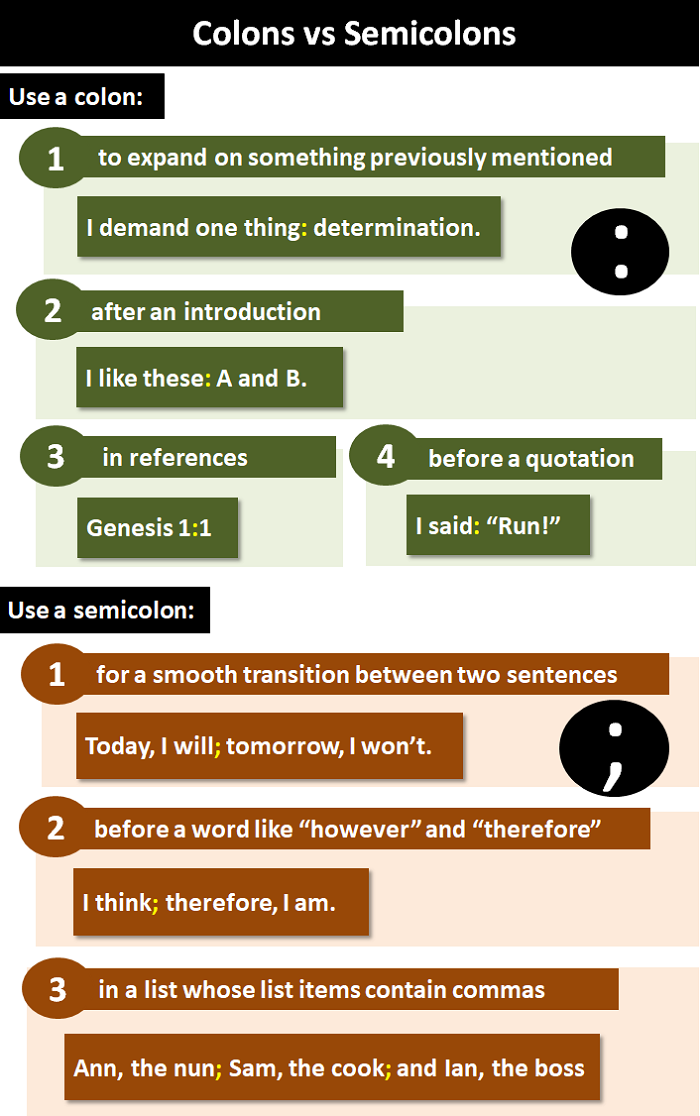
The colon is used to introduce or explain the preceding phrase, while the semicolon is used to connect two independent clauses that are closely related in thought.

The Possibilities
The colon and semicolon have so many exciting uses, here are just a few:
- Use a colon to introduce a list or series.
- Use a semicolon to combine two related independent clauses.
- Use a colon to introduce a quote.
- Use a semicolon to replace a period when you want to connect two related sentences.
- Use a colon to introduce an explanation or example.
- Use a semicolon to separate items in a list that have internal commas.
The Tips
Here are some tips to help you decide when to use a colon and when to use a semicolon:
- Use a colon after a complete sentence to introduce a list or explanation. For example, "I want to eat something healthy: a salad, some fruit, or a smoothie."
- Use a semicolon to join two independent clauses that are closely related in thought. For example, "I love pizza; it's my favorite food."
- Use a colon to introduce a quote or example. For example, "As Winston Churchill once said: 'Success is stumbling from failure to failure with no loss of enthusiasm.'"
- Use a semicolon to replace a period when you want to connect two closely related sentences. For example, "I need to go to the store; I'm out of milk."
- Use a colon to introduce an explanation or definition. For example, "The definition of irony is: the expression of one's meaning by using language that normally signifies the opposite."
- Use a semicolon to separate items in a list that have internal commas. For example, "I invited my friends Sam, who lives in New York; Jane, who is a musician; and Tom, who is a teacher."
More Examples and Ideas

The How-To
Still not sure how to use these powerful punctuation marks? Here are a few examples to help guide you:
- Connect two closely related sentences: "I'm tired; I'm going to bed."
- Introduce a quote or example: "As Albert Einstein once said: 'Imagination is more important than knowledge.'"
- Introduce a list: "I need the following items from the grocery store: bread, milk, eggs, and butter."
- Separate items in a list that have internal commas: "My favorite hobbies include reading novels; watching movies, especially comedies; and playing board games with my family."
- Introduce an explanation or definition: "There are three primary colors: red, blue, and yellow."
- Separate two independent clauses closely related in thought: "I studied all night for my exam; I hope I do well."
The Why
Why use a colon or semicolon when a plain old period or comma will do? Because they add variety and nuance to your writing, making it more interesting and engaging to read. Plus, they allow you to convey more complex ideas in a single sentence.
The Bottom Line
If you want to take your writing to the next level, try incorporating colons and semicolons. With practice, you'll master these punctuation marks and impress your readers with your sophisticated writing style.
Find more articles about When To Use The Colon And Semicolon
Post a Comment for "When To Use The Colon And Semicolon"