When Did Protestant Reformation Start
When Did Protestant Reformation Start - Have you ever wondered about the origins of the Protestant Reformation? It was a religious movement that started in Europe in the 16th century, and it had a significant impact on the continent and beyond. To understand the Reformation, you need to know about the events that led up to it, the individuals who played a vital role, and the impact it had on society. In this post, we will explore all of these topics, using a combination of images and text. So let's get started!
The Protestant Reformation by grubio3164
The Beginning
Before we dive into the specifics of the Protestant Reformation, let's go back in time to the early 16th century. At this point, the Roman Catholic Church had been the dominant religious institution in Europe for centuries. However, in the late Middle Ages, there were growing concerns about corruption within the church, including the sale of indulgences (which were said to lessen the amount of time someone would spend in purgatory).
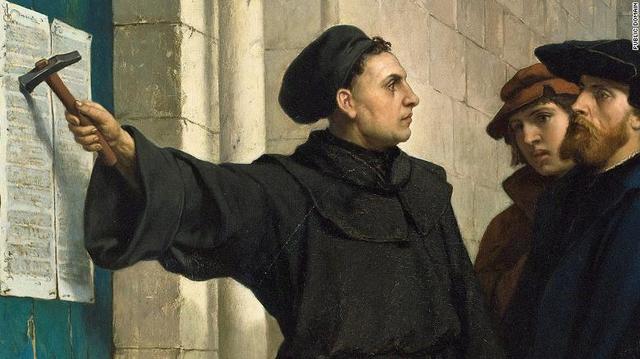
One of the most famous critics of the church during this time was the German monk Martin Luther. In 1517, he famously nailed his 95 Theses to the door of the Castle Church in Wittenberg, sparking a debate about the role of the church in the lives of ordinary people. Luther argued that salvation could not be bought, but rather was a free gift from God to those who had faith.
Luther's ideas quickly spread throughout Europe, aided by the printing press, which had been invented several decades earlier. This meant that his writings and ideas could be disseminated quickly and easily, and his message resonated with many people who were unhappy with the state of the church.

Chapter 1: The Protestant Reformation
The Controversy
The Protestant Reformation was not a single event, but rather a series of controversies and debates that lasted for decades. One of the most significant was the debate between Luther and the Catholic theologian Johann Eck at the Leipzig Debate in 1519. The two argued over the role of faith versus good works in salvation, with Luther famously declaring that "we are saved by faith alone."
Other figures of the time, such as the Swiss reformer Ulrich Zwingli and the French thinker John Calvin, also played important roles in shaping the Protestant movement. Zwingli's ideas were influential in Switzerland, while Calvin's writings on predestination and the sovereignty of God helped to create a new strand of Protestant thought.

BlueHost.com | Reformation day, Reformation sunday, Reformation
The Impact
The Protestant Reformation had a significant impact on Europe, both religiously and socially. The emergence of new Protestant denominations led to a fragmentation of Christianity, with Catholics and Protestants often at odds with each other. This created a period of instability and conflict, including the Thirty Years' War (1618-1648), which devastated much of central Europe.
However, the Reformation also had positive consequences, such as the rise of individualism and the importance of personal opinion. It also led to a renewed emphasis on education, as Protestants sought to teach people to read so that they could read the Bible for themselves.

What Did the Protestant Reformation Lead To? - Synonym
Tips for Understanding the Reformation
One of the most important things to understand about the Protestant Reformation is that it was not a single event, but rather a series of debates and controversies that lasted for decades. It was a time of religious upheaval and change, as new ideas about faith and salvation challenged the old order. Here are some tips for understanding the Reformation:
- Read primary sources from the time, including the writings of figures like Martin Luther and John Calvin.
- Understand the social and political context of the Reformation, including the tensions between different regions and the role of the printing press.
- Explore the impact of the Reformation on art, music, and literature, as well as on other areas of society such as education and politics.

Jake.Busa 8-5 timeline | Timetoast timelines
Ideas for Further Exploration
If you are interested in learning more about the Protestant Reformation, there are many resources available to you. Here are some ideas for further exploration:
- Visit museums and historical sites related to the Reformation, such as the Lutherhaus in Wittenberg or the Calvinist Church in Geneva.
- Read books about the Reformation, such as Diarmaid MacCulloch's "The Reformation: A History."
- Listen to podcasts or watch videos about the Reformation, such as the "Religions of the World" episode on the Reformation from the BBC.
- Join a discussion group or forum about the Reformation, where you can engage with others who are interested in the topic.
In Conclusion
The Protestant Reformation was a significant event in the history of Europe and beyond. It challenged the authority of the Catholic Church and led to the rise of new Protestant denominations. It also had important social and cultural consequences, including the promotion of education and the encouragement of individualism. By exploring the events and ideas of the Reformation, we can gain a greater appreciation for this time of religious upheaval and change.
Read more articles about When Did Protestant Reformation Start
Post a Comment for "When Did Protestant Reformation Start"