When To Use Commas Or Semicolons
Hey y'all, let's talk about when to use commas or semicolons in your writing. It can be a little confusing, but once you get the hang of it, it'll make your writing so much clearer and easier to read. Check out these tips and ideas for how to use them correctly.
Using Commas
Commas in a Series
When you're listing out items in a series, you gotta use commas to separate them. For example, "I need to buy eggs, milk, and bread." Without the commas, it would be unclear if you need to buy "milk and bread" as a combined item or if they're separate items.
Commas with Introductory Words or Phrases
When you start a sentence with an introductory word or phrase, like "however" or "in addition," you need to separate it with a comma. For example, "However, I do not agree with your stance." The comma lets the reader know that the sentence is starting with an introduction and not a complete thought.
Using Semicolons
Connecting Independent Clauses
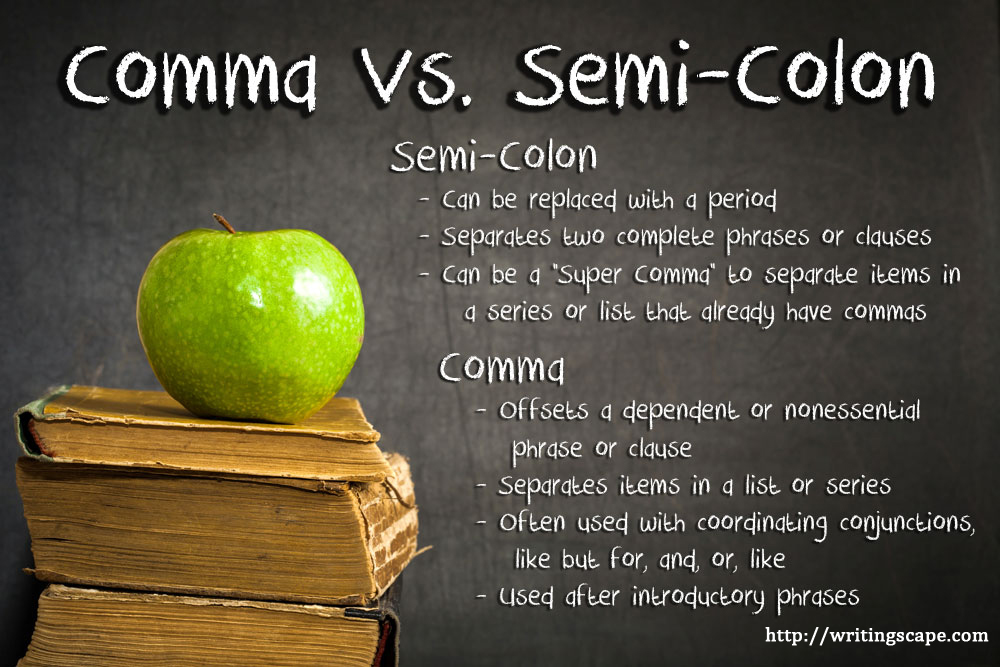
When you have two complete thoughts in one sentence, you can connect them with a semicolon instead of breaking them into two sentences. For example, "I woke up early; I had a lot to do." This can make your writing flow more smoothly and avoid short, choppy sentences.
Separating Items in a List
If you're listing out items in a sentence, and each item has its own commas, you can use semicolons to separate the items. For example, "I need to buy eggs, milk, and bread; tomatoes, lettuce, and onions; and chicken and beef." Using semicolons helps make the list easier to read and less confusing.
When to Use Commas vs. Semicolons
Now that we've gone over the basic rules for using commas and semicolons, let's talk about when to use one over the other.
Use a comma for:
- Separating items in a series
- Introducing a sentence with a word or phrase
- Joining dependent and independent clauses
Use a semicolon for:
- Connecting two independent clauses
- Separating items in a list that have their own commas
Tips for Using Commas and Semicolons
Here are some additional tips to help you use commas and semicolons correctly:
Tip #1: Don't Overuse Them
While commas and semicolons can be helpful for creating clear, concise sentences, using them too much can actually make your writing more confusing. Try to keep your sentences short and simple, and only use commas and semicolons when they're truly necessary.
Tip #2: Pay Attention to Context
The rules for using commas and semicolons can change depending on the context of your writing. For example, academic writing may require more semicolons than casual writing. Make sure to pay attention to the tone and style of your writing, and adjust your use of commas and semicolons accordingly.
In Conclusion
Knowing when to use commas, semicolons, and other punctuation can take your writing to the next level. With these tips and ideas, you'll be able to tackle even the toughest sentences with ease.
View more articles about When To Use Commas Or Semicolons
Post a Comment for "When To Use Commas Or Semicolons"